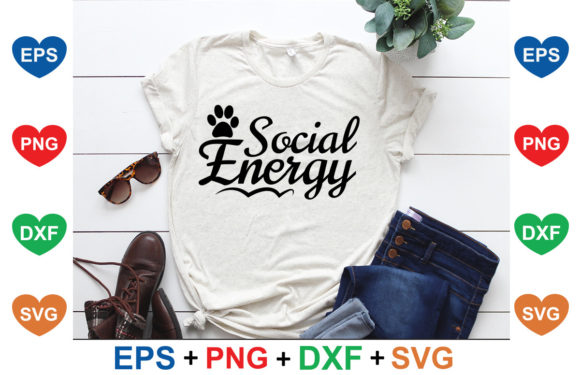
Social Energy
First Impressions: A Friendly, Uncluttered Pulse
Opening the Social Energy design feels like stepping into a sunlit room—light, approachable, and quietly confident. It’s not shouting; it’s connecting. As an embroidery designer who’s stitched hundreds of dog-themed motifs for boutiques, Etsy shops, and custom gift orders, I immediately notice how this design avoids visual fatigue: clean lines, balanced negative space, and a gentle rhythm in its composition. The dog isn’t hyper-detailed—it’s expressive, stylized, and built for legibility at real-world sizes. That matters immensely when you’re stitching on a toddler’s onesie or a linen tea towel meant to last years.
A Real-World Test: Embroidering It on a Canvas Tote Bag
Last week, I prepped Social Energy for a small-batch order of organic cotton tote bags—meant as welcome gifts for a local co-working space’s new members. The goal? Warmth, professionalism, and instant recognition. I hooped medium-weight tear-away stabilizer, chose matte cotton thread in warm charcoal and soft oat, and ran a 4” x 4” version. What stood out wasn’t just how cleanly the curves stitched (no puckering, no skipped satin stitch segments), but how the design *breathed* on the fabric. The simplified silhouette held up beautifully at that scale—no lost details, no muddy fill areas. Customers later told me the tote felt “thoughtful, not trendy”—a subtle win for any craft business building trust through handmade product integrity.
Where Social Energy Shines—and Where It Needs Thought
Social Energy is strongest on mid-to-heavyweight fabrics with low stretch and moderate texture: canvas totes, fleece-lined sweatshirts, structured aprons, and brushed cotton pillow covers. Its open layout makes it forgiving on slightly uneven surfaces—like the curved seam of a baseball cap front panel or the corner of a kitchen towel. As a machine embroidery design, it avoids dense fill stitch traps, so stitch density stays manageable even on home embroidery machines.
That said, I’d pause before using it on:
- Ultra-thin baby knit—fine details (like ear contours or subtle facial cues) may blur without precise stabilizing;
- Highly textured bouclé or heavy terry cloth—those open shapes need consistent fabric support to prevent thread lift;
- Dark fabric without testing contrast—its friendly charm relies on clarity, so always check how your chosen thread colors read against navy, charcoal, or deep olive;
- Curved or layered garments (e.g., hoodies with thick drawcords) without re-hooping or floating stabilizer—some outer curves benefit from light repositioning.
More Than Just a Dog: What This Design Communicates
Social Energy isn’t just a cute graphic—it’s a tone-setter. On a nursery wall hanging? It reads as calm, joyful, grounded. On a boutique coffee shop apron? It adds approachability without sacrificing polish. For an Etsy seller listing personalized embroidered patches, it offers instant emotional resonance—customers don’t just buy a dog; they buy connection, companionship, shared energy. That intangible lift directly affects buyer engagement, repeat orders, and perceived value. When your finished product looks intentional—not rushed or pixelated—it reinforces professionalism, whether you're gifting it or selling it.
Practical Designer Notes Before You Stitch
Before committing to a full run—whether for holiday embroidery, custom apparel, or a small shop product—do these six things:
- Test on scrap fabric first, using the exact stabilizer and thread you’ll use commercially—canvas behaves differently than cotton poplin, and that changes everything;
- Check thread color contrast in natural light and under store lighting—what reads well on screen may vanish on dark fabric;
- Review stitch density visually in your embroidery software—look for tight clusters or long jump stitches that could snag during wear;
- Confirm hoop size compatibility—the SVG and EPS files give flexibility, but your machine’s max hoop limits what size you can stitch without splitting;
- Inspect small details at 200% zoom—especially around eyes, nose, and paw outlines—to ensure they’ll translate cleanly in satin or running stitch;
- Test black-and-white mockups across light and dark backgrounds—this reveals balance and silhouette strength faster than color ever will.
Licensing & Commercial Use: A Quiet but Critical Check
The ZIP includes EPS, SVG, PNG, and JPG files—ideal for both digital embroidery file prep and printable mockups—but remember: file format ≠ usage rights. If you’re an Etsy seller, craft fair vendor, or small shop owner planning to sell finished products (embroidered patches, tote bag designs, sweatshirt embroidery), verify the license permits commercial embroidery and resale of physical items. Some graphics allow personal use only; others require attribution or limit quantity. When in doubt, contact the creator—or better yet, choose assets clearly labeled for commercial embroidery. Your reputation hinges on transparency, not assumptions.
Fitting Into Your Creative Workflow
Social Energy slots naturally into several high-value niches: baby embroidery (paired with soft pastel threads on bamboo blend onesies), holiday embroidery (think cozy dog motifs on flannel pillow covers for Christmas markets), and boutique branding (subtle logo alternatives for pet-friendly cafes or wellness studios). As a T-Shirt Designs asset, it works best oversized on relaxed-fit tees—not cramped on youth sizes. And as a Graphics file set, it bridges digital and physical: use the PNG for social media previews, the SVG for vector-based applique design adaptation, and the EPS if you’re prepping for screen printing backups.
The Bottom Line for Makers
Social Energy earns its place in my working library because it balances simplicity with soul. It doesn’t overpromise. It doesn’t demand perfect conditions to succeed. It supports the maker—not the other way around. Whether you’re stitching a single personalized gift or scaling for a craft business launch, this design respects your time, your machine, and your customer’s expectations. It’s the kind of embroidery file that makes clients smile before they even touch the fabric—and that, honestly, is the quietest kind of success.