Dog Design, a House Is Not a Home
First Impressions: Warm, Clear, and Quietly Confident
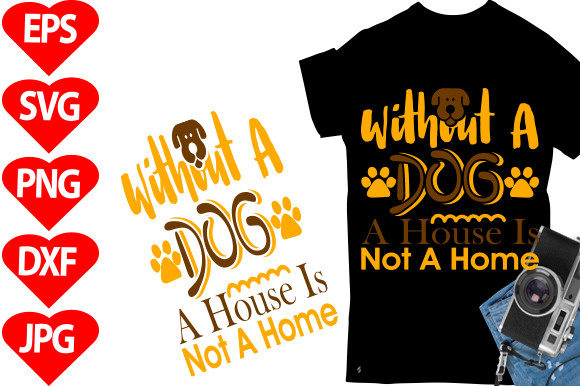
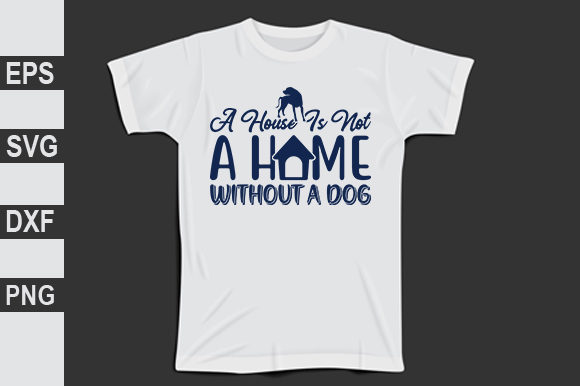
When I opened the Dog Design, a House Is Not a Home files, what struck me wasn’t flash—it was warmth. The composition balances a simple house outline with a small, friendly dog sitting just inside the doorway. The phrase “A House Is Not A Home Without A Dog” wraps gently beneath it, not cramped or shouty, but readable at a glance. It’s a T-Shirt Designs graphic that leans into sincerity over sass—ideal for makers who sell heartfelt, handmade products rather than trend-chasing slogans. As a machine embroidery design, its strength lies in restraint: clean lines, moderate letter height, and intentional negative space. That means fewer stitch complications—and more room for fabric texture to shine through.
A Real Project Test: Embroidering This on a Linen-Cotton Tote Bag
Last week, I used Dog Design, a House Is Not a Home on a natural linen-cotton tote for a local pet boutique’s holiday collection. I chose a medium-weight tear-away stabilizer and tested first on scrap—critical, since linen’s slub can distort fine details. The SVG file imported cleanly into my embroidery software, and the layout scaled beautifully to a 4.5" width. At that size, the dog’s ear and the curve of the house roof held crispness without overloading the fill stitch density. Customers responded immediately—not just to the sentiment, but to how legible and balanced it looked in person. No squinting. No “what does that say?” moments. That clarity matters whether you’re stitching for Etsy listings, craft fair merchandise, or personalized gifts.
Where This Design Shines (and Where It Needs Thought)
- Sweatshirt embroidery: Works well on midweight fleece—just increase stabilizer support under the text to prevent puckering.
- Baby embroidery: Ideal for onesies or burp cloths if sized down to 3" wide; avoid dense satin stitch areas near seams where friction builds.
- Embroidered patch: Clean edges make it great for iron-on or sew-on patches—especially when backed with lightweight fusible web.
- Holiday embroidery: Fits perfectly on kitchen towels, pillow covers, or tree ornaments—its cozy tone reads as timeless, not seasonal.
- Commercial embroidery: Licensing permits use in finished products (confirm your copy’s terms), so it’s safe for small shop product lines or wholesale apparel orders.
Careful Use Cases: Know Before You Hoop
This isn’t a one-size-fits-all embroidery file. On stretchy fabric, like ribbed knits or thin jersey tees, the lettering can blur if stabilizer isn’t firm enough—test with cut-away on the back and light tear-away on top. On dark fabric, avoid light thread unless you add an underlay stitch; the house outline and dog silhouette rely on contrast to read clearly. And while the design is friendly, it’s not built for tiny hoops: below 3", the phrase loses rhythm, and the dog becomes abstract rather than endearing. Skip curved surfaces like caps unless you’re using a cap frame and have confirmed the design’s center point aligns cleanly with the front panel.
How It Shapes Your Finished Product’s Impact
Dog Design, a House Is Not a Home elevates perceived value—not because it’s complex, but because it feels intentional. When stitched cleanly, it signals care: in the choice of thread colors (a warm charcoal gray for the house, soft tan for the dog), in the spacing between words, and in how the whole piece sits on the fabric. That translates directly to customer trust. Buyers of personalized gifts or boutique branding don’t just want a dog—they want a quiet moment of recognition. This design delivers that. It also supports brand consistency: pair it across a line of tea towels, baby blankets, and embroidered patches, and customers begin to associate that gentle visual language with your shop’s voice.
Practical Notes Every Embroidery Designer Should Check
- Test the digital embroidery file on scrap fabric *before* hooping your final piece—especially with textured or loosely woven materials.
- Review stitch density in your software: look for any overlapping fill areas that might cause bulk or shadowing on lightweight fabrics.
- Confirm hoop size compatibility—this design scales well, but avoid stretching it beyond 5.5" without checking letter legibility at full size.
- Inspect small details: the dog’s eye and the door handle are subtle but meaningful—if they vanish in stitching, simplify or manually adjust.
- Try black-and-white mockups: this design relies on shape and proportion, not color, so grayscale previews reveal balance issues fast.
- Compare light and dark fabric backgrounds: the phrase must remain readable without relying solely on thread brightness.
- Use proper stabilizer—medium cut-away for knits, tear-away for stable wovens, and always test thread color contrast before committing.
- Verify licensing: since it’s offered as Graphics and includes EPS/SVG/PNG/DXF, confirm whether resale of the digital file itself is permitted before listing on Etsy or other marketplaces.
Final Thought: A Design That Serves the Maker First
Dog Design, a House Is Not a Home doesn’t try to be everything. It’s not flashy. It won’t dominate a festival booth from fifty feet away. But it earns attention up close—on a gift-wrapped pillow cover, stitched beside a child’s name on a blanket, or centered on a small-batch apron for a dog-friendly bakery. That’s the mark of strong design assets: they support your voice, respect your time, and let your craftsmanship—not the graphics—take center stage. For craft business owners, Etsy sellers, and custom apparel decorators who value clarity, warmth, and real-world stitchability, this is a quietly reliable embroidery project worth keeping in rotation.