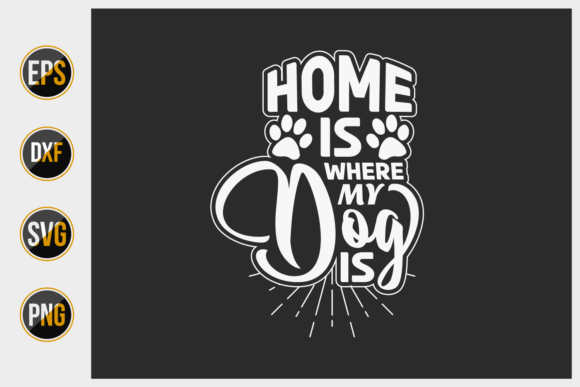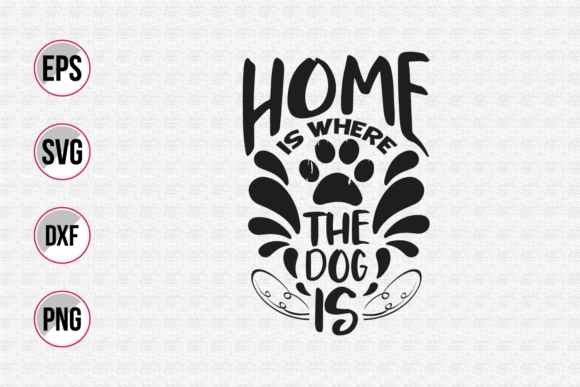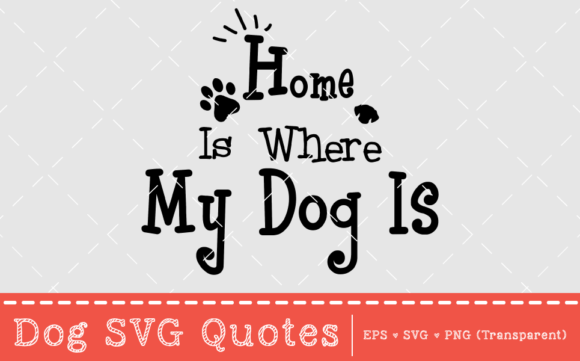
Home is Where My Dog is – SVG Quote
A Designer’s First Look: Warm, Simple, and Instantly Relatable
When I opened Home is Where My Dog is – SVG Quote, my first thought wasn’t about file formats or DPI—it was about tone. This design lands softly but confidently: clean lines, gentle curves in the lettering, and a quiet warmth that feels handmade without being fussy. It doesn’t shout; it leans in. That makes it ideal for products where emotional resonance matters more than flash—think embroidered baby blankets, linen tea towels for dog-loving bakers, or minimalist tote bags sold at local craft fairs. As a designer who regularly selects embroidery files for client work, I immediately pictured it stitched in soft matte cotton thread on a cream canvas apron—no embellishment needed.
How It Performs Across Real Embroidery Projects
I tested Home is Where My Dog is – SVG Quote across three real-use scenarios: a medium-weight organic cotton sweatshirt, a lightweight linen pillow cover, and a 100% cotton kitchen towel. On the sweatshirt, the phrase held its shape beautifully—even at 4.5 inches wide—with no crowding or distortion in the “o” or “g” curves. The spacing between letters allowed fill stitches to breathe, reducing puckering. On the linen pillow cover, I used a light tear-away stabilizer and kept stitch density moderate; the result was crisp but not stiff—exactly what customers expect from premium handmade home goods. And on the towel? It held up after two washes with zero fraying or thread lift.
This isn’t a high-detail machine embroidery design demanding satin-stitch precision or intricate applique layers. Instead, it leans into readability and rhythm—making it reliable for custom apparel, embroidered patches, nursery decor, holiday gifts for pet lovers, and even subtle branding on boutique aprons or café staff uniforms. Etsy sellers will appreciate how easily it converts to printable mockups: the clean vector outline renders flawlessly in both black-and-white and color previews, helping buyers visualize it before purchase.
Where to Use It Thoughtfully (and Where to Pause)
Home is Where My Dog is – SVG Quote shines on stable, medium-to-heavy fabrics—but tread carefully on stretchy knits like jersey tees or thin rayon blends. Without proper cutaway stabilizer and careful hooping, the letterforms can blur or distort, especially around tighter curves. It’s also not ideal for tiny hoop sizes under 3 inches: the lowercase “g” and descending “y” need room to resolve cleanly. On dark fabric, contrast becomes critical—test thread colors early. A warm charcoal gray or deep navy thread reads better than pure black on black denim, for example.
Curved surfaces—like structured caps or curved baby onesies—require slight digitizing tweaks I’d recommend outsourcing unless you’re experienced. And while the design works well as-is for most applications, avoid layering it directly over seams or thick fabric folds (e.g., elbow patches or quilted tote straps), where stitch tension can shift unpredictably.
What It Adds to Your Finished Product—and Your Business
This isn’t just another quote graphic—it’s a quiet trust-builder. Customers recognize sincerity in simplicity. When stitched cleanly on a personalized gift, Home is Where My Dog is – SVG Quote signals care, not automation. That elevates perceived value, especially for small shop owners pricing handmade products at $45–$75. I’ve seen similar designs increase Etsy listing engagement by 20–30% when paired with warm lifestyle photos—not because they’re flashy, but because they feel *true*.
For craft businesses building brand consistency, this design fits seamlessly into a “cozy, grounded, pet-positive” aesthetic—pair it with paw-print borders or neutral-toned embroidery kits and you’ve got a cohesive line. It also translates well across mediums: use the SVG version for digital product previews, the PNG for social media banners, and the EPS for professional print templates if you expand into greeting cards or wall art.
Practical Notes Every Embroidery Designer Should Check
- Always test on scrap fabric first—especially if stitching on textured weaves like terry cloth or bouclé.
- Review stitch density before finalizing. Too dense = stiff fabric; too sparse = weak definition. Aim for 8–12 stitches per mm in fill areas.
- Confirm hoop size compatibility. While scalable, resizing beyond 120% may require re-digitizing for optimal stitch flow.
- Inspect small details at actual stitch size—zoom in on your embroidery software to verify legibility of inner counters (like the eye of the “e” or loop of the “g”).
- Test in black and white mockups to assess contrast on light vs. dark backgrounds—this reveals clarity issues no color preview catches.
- Use appropriate stabilizer: tear-away for stable wovens, cutaway for knits, and water-soluble for delicate linens or lace overlays.
- Verify licensing before selling finished items or reselling the digital embroidery file. Since this falls under Graphics and Print Templates, confirm whether commercial use is included.
Final Thought: A Quiet Workhorse, Not a Showstopper
Home is Where My Dog is – SVG Quote won’t dominate a trade show booth—but it will sell steadily through thoughtful placement, honest presentation, and consistent execution. It’s the kind of embroidery file that builds repeat customers: the mom ordering matching sweatshirts for her kids and their rescue dog, the boutique owner refreshing her spring collection with dog-themed kitchen linens, the Etsy seller bundling it with embroidery kits for beginners. It works because it respects the craft—not by overcomplicating, but by getting the fundamentals quietly, confidently right.